
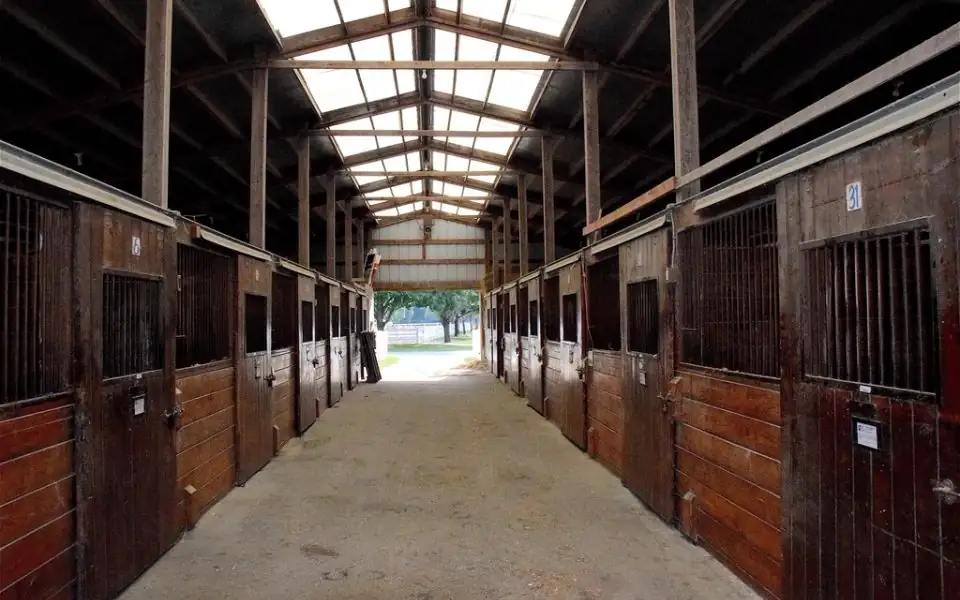
Langley likes to call itself the Horse Capital of B.C., and anyone looking for horse boarding between Surrey and Chilliwack will find plenty of choice: large show barns with indoor arenas, quiet family farms with a few paddocks, and self-care set-ups where the owner does most of the work. The range is useful, but it also makes comparison hard. Two stables can charge similar amounts and deliver very different care, especially through a long, wet coastal winter. A structured approach, from your own priorities through to the contract, makes the decision far less of a guess.
Start with your own list, not the barn's brochure
Before calling anyone, write down your horse's needs and your own as a rider. An older mare who copes badly with mud needs dry footing more than a jump course, while a rider aiming at summer shows may happily give up some paddock space for a good coach and ring. Typical items on the list:
- maximum driving time from home or work, at rush hour rather than on a Sunday;
- monthly budget, including likely extras;
- daily turnout, in a group or alone;
- a covered or indoor arena, which matters more here than in drier parts of Canada;
- riding disciplines on site and access to trails for horseback riding outside the ring;
- a resident coach, or the freedom to bring your own.
Then mark the two or three items you will not give up. The rest are bargaining chips, because the perfect stable rarely exists within a reasonable drive.
Boarding options and what each one includes
Horse boarding packages carry different names from one facility to the next, so always ask what a given package means in practice. Broadly, the boarding options available in the region fall into four groups.
Full board
Your horse has its own stall and the staff handle feeding, watering, stall cleaning and turnout every day. Blanketing, fly masks and farrier visits may be among the included services or billed separately. This boarding option costs the most and asks the least of your time.
Partial board
The stable provides the stall and some services, while the owner takes on part of the daily routine, for example morning feeds or weekend stall cleaning. Arrangements differ widely, so get the split in writing.
Self-care boarding
You rent space, and sometimes storage, and do the rest yourself. It is usually the cheapest monthly boarding arrangement, but it suits only a horse owner who can be at the barn every day, in any weather, with a back-up plan for holidays and illness.
Pasture board
The horse lives outdoors in a field with shelter and water, and staff feed it and look it over. It can suit easy keepers that dislike confinement, but rarely a horse with medical needs that call for close daily monitoring. In the Fraser Valley, ask how the fields hold up from November to March, because a grass pasture in September can be deep mud by January. Some boarding facilities also offer a stall with an attached run, a middle ground between the two.
What horse boarding really costs
Prices change with location, facilities and the level of care, so the only reliable figures are the ones each stable quotes you. The base rate, however, is rarely the whole bill. Ask for a written list of what the chosen option includes and the additional charge for anything outside it, such as:
- blanket changes as the weather swings, which in a valley winter can mean twice a day;
- holding your horse for the farrier or vet while you are at work;
- feeding supplements, extra hay or a special diet;
- the extra labour of an injury: stall rest, cold-hosing, medication;
- arena use, lessons and trailer parking.
It is also fair to ask when the rate last rose and how much notice boarders get before the next increase. A boarding facility that answers these questions clearly at the start is usually just as clear when problems come up later.
Turnout through a wet coastal winter
Daily turnout is central to a horse's health and behaviour, and it is also where Fraser Valley facilities differ most. Heavy winter rain on poorly drained soil turns unprotected paddocks into mud that pulls off shoes and keeps legs wet for days at a time. Well-run properties manage this with drainage, gravel or hog-fuel sacrifice areas, rotated fields and paddocks that are rested over winter.
Useful questions to ask:
- Do turnout hours shrink in winter, and by how much?
- Who decides that a day is too wet or icy for horses to go out?
- How long does a newcomer spend beside the group, over a fence, before joining it?
- Is individual turnout available, and does it cost extra?
- Is hay put out under cover, or on the ground in the rain?
Walk the paddocks yourself, ideally after a few days of rain. Deep mud at gates and troughs, fencing patched with baler twine and horses crowded under one small shelter tell you more than any description on a website.
Feed, water and daily horse care
Feeding is where the details of a horse's care become visible. Ask to see the hay itself: smell it, look for dust and mould, and ask whether the barn has enough stored to last the winter, because switching to a new batch in a hurry is hard on digestion. Then find out how the hay is fed, by weight or by the flake, and whether one horse's ration can differ from its neighbour's. Grain and supplements are often the owner's job even on full board, so ask who stores and measures them.
Water deserves its own question. The national Code of Practice for the Care and Handling of Equines requires that horses have access to clean, palatable water in quantities that maintain health and vigour, with special attention in very hot or cold weather. In practice, check how buckets and troughs are cleaned and ask how frozen waterers are handled during a cold snap. The same code expects horses to be observed as often as needed and blanketed horses to be examined underneath at least weekly, a reasonable yardstick for any equine routine.
Barns, arenas and tack storage
Inside the barn, stand in an empty stall for a minute. An ammonia smell on a damp day points to thin bedding or poor airflow, and a loose board or a nail head is exactly what a bored horse finds first. In a climate this wet, a covered arena with decent footing often decides if riders can keep riding on a regular schedule between October and April, so ask when boarders may use it and how often it is booked for other events.
The tack room is easy to overlook, yet it is where a valley winter does quiet damage: in a cold, closed room with no heater or dehumidifier, mould can spread over saddles and bridles within weeks. Ask whether lockers are part of board or rented separately, and where wet blankets are hung to dry, since tack and equipment kept damp wear out far sooner.
Health, biosecurity and emergencies
A well-run boarding barn has clear answers about health care. Ask if you can use your own vet and farrier, if the facility can offer group vaccination and deworming days, and how a sick horse is isolated. For new arrivals, the Canadian Food Inspection Agency recommends isolating incoming horses until they have been tested for equine infectious anemia, a reportable disease in Canada, and testing wherever horses from different sources mix. Many facilities ask for a recent negative Coggins test and vaccination records before move-in.
Emergencies need equal attention:
- What happens if your horse colics or is injured and you cannot be reached?
- Does anyone sleep on the property, or is the barn empty after evening feed?
- If a horse needs an equine hospital at night, whose trailer takes it?
- Can staff take a temperature and pulse and pass them to the vet by phone?
- Is there an evacuation plan for fire or flood?
That last question is not theoretical in the valley. The November 2021 floods on the Sumas Prairie in Abbotsford forced the evacuation of farms and livestock at short notice, so ask before it is needed.
People, coaching and barn culture
Your horse will spend most of its time with the staff, so meet the person who does the daily chores, not just the owner. Ask who covers morning feed when that person is sick or away, and how long the current team has been in place, since frequent staff changes usually show in the horses. If you take lessons, make sure the resident coach works at your level, and get the rules for outside coaches in writing before you move rather than after.
Current boarders are worth a few minutes in the aisle. A useful question is simply how long they have been there: a barn where most people have stayed for years is telling you something different from one with a new face every month. A busy equestrian centre that hosts lessons, clinics and shows suits some riders; a small, quiet stable with a handful of horse owners suits others. Neither is better, but one will probably fit you more, and that fit decides much of how enjoyable the boarding experience will be.
Visiting and reading the contract
Shortlist three or four stables and visit each with the same list of questions, so the answers can be compared side by side. Try to see at least one at feeding time or on a wet weekday morning, when the routine is hardest to stage, while keeping to posted barn hours. It is reasonable to read reviews online for specific questions to raise, but a single angry post says less than an hour spent on the property.
Before you move, read the boarding agreement carefully. Look for the services and extras in writing, the notice period on both sides, what happens to your horse if board falls behind, and who pays when a horse damages fencing or another animal. Many BC owners rely on the excess personal liability cover that comes with Horse Council BC membership, so check whether the contract expects more than that. A facility with no written agreement at all is a reason to keep looking, however good the arenas.
Making the move
Once you have chosen, plan the transition. Bring a few days of your current hay to mix in, share your horse's health history and quirks with the staff, and keep the first weeks quiet while it settles. Finding the right stable takes time, and in the Fraser Valley the real test comes in January rather than July. A horse boarding arrangement that still works through the wet months, for the horse and for your riding schedule, makes horse ownership easier all year and is worth more than a lower rate at facilities that only work in dry weather.
