
The English vs Western riding question comes up early for almost every new rider, and in the Lower Mainland both traditions are easy to see. Thunderbird Show Park in Langley, whose shows date back to 1972, is a major hunter and jumper venue, while the Cloverdale Rodeo in Surrey goes back to the 1940s. The two styles of riding share more than their equipment suggests, but the differences in saddle, rein handling and gaits all change how the first months feel. Here is how they compare and how to decide where to start.
The saddle: the first difference you notice
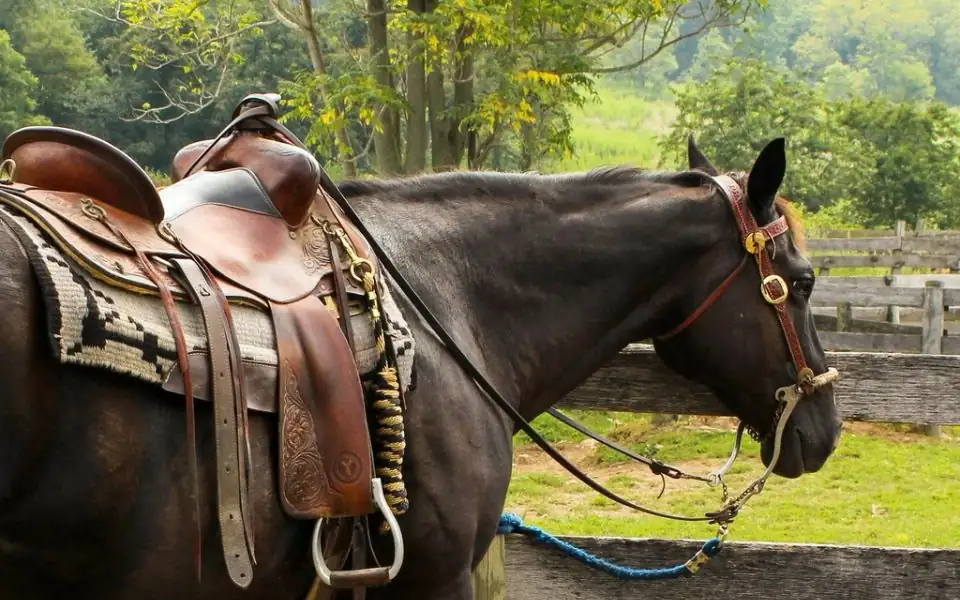
A Western saddle is large and heavy. It has a deeper seat, a high pommel at the front and a high cantle behind, plus the horn that ranch hands once used to anchor a rope when working cattle. Broad skirts spread the rider's weight over a large area of the horse's back, which made sense for people who spent whole days on horseback.
English saddles are smaller, lighter and flatter, with a low cantle and very little to hold on to. Riders call this close contact: with less leather in the way, you feel the horse's movements more clearly, and the horse feels more of your weight and leg. The design also gives the freedom of movement needed to rise at the trot or fold forward as the horse jumps.
For a beginner, the practical effect is simple. Many people feel held in place by the stock saddle from the first ride, and a little exposed in the flat one. Compared with an English saddle, Western saddles give the body more to lean against.
Reins and steering in the two styles
English riders hold a rein in each hand and keep a light, steady contact with the bit, usually a snaffle. Turning comes from direct pressure: the left rein asks the horse to bend and move left. Instructors call this direct reining.
In the cowboy tradition, both reins are held in one hand with some slack, and the horse turns when a rein touches its neck, helped by the rider's weight and leg. That is neck reining, and it leaves the other hand free for a rope or a gate. Western horses are often ridden in a curb bit, and many Western riders prefer split reins, two separate straps rather than one closed loop. Even so, coaches commonly start beginners on two hands and direct reining in either saddle, then add neck reining once the seat is secure enough not to tip sideways.
Gaits and what they ask of a new rider
Both riding styles use the same basic gaits; the names and the expected pace differ.
| Gait | English | Western |
|---|---|---|
| Walk | Walk | Walk |
| Two-beat gait | Trot, often ridden rising (posting) | Jog, a slow, smooth trot the rider usually sits |
| Three-beat gait | Canter, which can be collected or extended | Lope, a slower, relaxed canter |
The rising trot is one of the first real hurdles in English riding, and coaches spend many lessons on it. The rider stands slightly in the stirrups on one beat and sits on the next, which takes rhythm and leg strength. A slow jog is easier to sit, so ranch-style riders usually get a gentler introduction to trotting, although some coaches still teach posting in a stock saddle to help students find the rhythm.
What stays the same in both styles
Much of the English vs Western riding debate overlooks how alike a good seat looks in either saddle. Photograph a balanced rider from the side in each style and the outline is nearly the same: upright, weight spread evenly over both seat bones, and the heel roughly under the hip rather than pushed forward. Legs, seat and hands work together as aids in both traditions, and with some training a horse schooled in one style can learn the cues of the other.
Safety rules do not change with the tack or the horse. Horse Council BC recommends a certified equestrian helmet for everyone who rides, whether English or Western, and reputable lesson programs expect one in every lesson.
Which riding style is easier for beginners?
For the first month, most people find Western riding the gentler start. A nervous adult can rest a hand on the horn, the deeper seat stops the forward slide that comes with a sudden halt, and a slow jog can be sat without bouncing. That sense of security lets a tense rider relax enough to listen to the instructor, which is half of learning.
English riding puts the hard part first. The flat saddle gives beginner horseback riders almost nothing to brace against, so the rising trot and the first canter expose every wobble. The payoff is an independent seat built early, and it carries over to any saddle. Coaches from each camp make their own case: English-trained riders are said to adapt to a stock saddle easily, while Western-trained riders point out that they learned to steer with weight and leg long before their hands were steady.
Neither argument settles it. The quality of the instructor and the lesson horses affects how riders learn far more than the shape of the saddle does, and a calm, well-schooled horse makes either style easier.
Where each discipline can lead
If you already know what you want to do in a few years, that often decides it. Each style offers a wide variety of disciplines:
- English disciplines: the most popular disciplines include hunters, show jumping, dressage and eventing, along with hunt seat equitation and saddle seat.
- Western disciplines: reining, Western pleasure, barrel racing, team penning, cutting, roping and ranch trail classes.
- Shared ground: endurance rides, recreational trail riding and general horsemanship are open to riders of either Western or English background.
Both paths are visible close to home, from the jumper rings in Langley to the rodeo arena in Cloverdale, so either choice gives a beginner somewhere to go next.
Clothing for lessons and competition
For lessons, the difference is small: long pants, boots with a heel and a helmet work in both. Competition dress is where the traditions separate. In a hunter or dressage class, expect pale breeches and tall boots, a dark coat over a light shirt and a fastened helmet; younger riders often compete in jodhpurs and paddock boots instead. Western style dress runs to starched shirts, belted jeans or show pants and cowboy boots under a felt or straw hat, although a helmet is now a common and accepted alternative. None of it needs to be bought until you decide to compete.
How to choose, and why you may not have to yet
A few questions narrow it down:
- Do you picture yourself jumping or riding dressage tests? Start English.
- Are you drawn to ranch work, cattle, reining or speed events? Start Western.
- Is security in the saddle your main concern right now? The stock saddle may be the gentler beginning.
- Not sure at all? Choose the best instructor near you and learn to ride in whatever saddle they teach.
Canada's national system already reflects that last point. Equestrian Canada's LearnToRide program begins with two Foundations levels that cover English and Western basics together, and only from Level 3 does it divide into separate streams: flat, jumping and cross-country on the English side, core skills, obstacles, speed events and reining on the other. At that stage, the English vs Western riding choice matters less than solid basics, and a beginner can pick a style of riding later, once they know which disciplines appeal. Plenty of riders end up doing both.
