
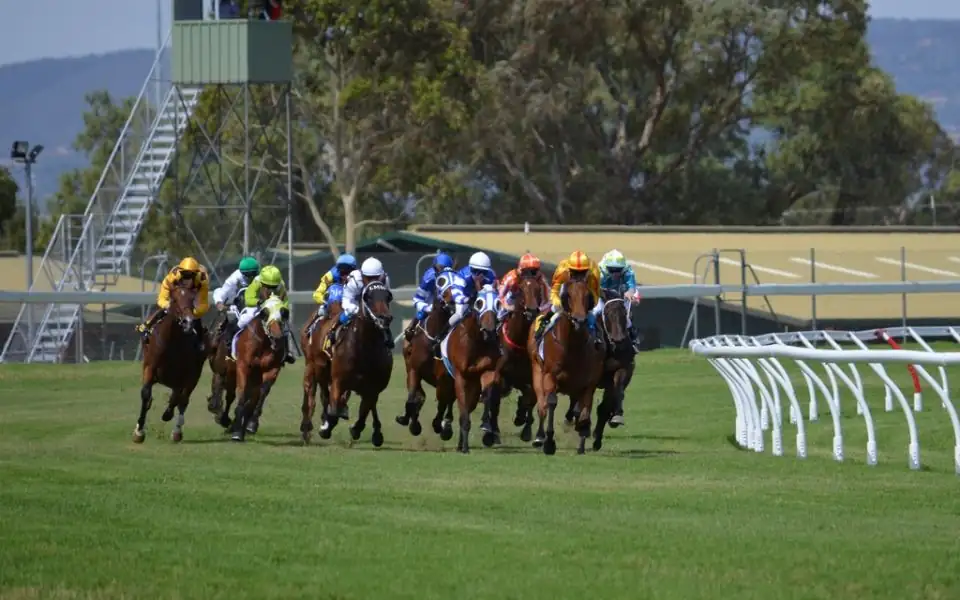
For well over a century, a summer evening at Hastings Racecourse in East Vancouver meant the bugle, the starting gate and a crowd leaning on the rail. In December 2025 the operator announced that live racing there was over for good, and with it the province lost its last thoroughbred track. What remains of horse racing in BC is a long history, a simulcast racebook beside the casino floor, a small harness meet in the Interior and racing-themed games that adults now mostly play on phones and laptops, often on online casino platforms.
How the track began
In 1888 Vancouver set aside a large tract in the New Brighton area, called East Park, for public recreation. Racing in the young city had been an informal affair held downtown, and a proper track soon took its place. Sources differ on the start date: the operator and most news reports say racing has been held on the site since 1889, while detailed track histories date the first race on the half-mile dirt oval, leased to the British Columbia Jockey Club, to September 1892. Once the Pacific National Exhibition held its first fair next door in 1910, the track picked up the name most of Vancouver used for the next eight decades: Exhibition Park.
The racecourse and the fair grew up together. A race card often opened the exhibition, and the amusement park that became Playland arrived in 1926, which turned the whole PNE site into a summer destination for the local community.
The Exhibition Park decades
Several firsts and turning points took place here:
- 1939: the oval became the first to send horses off from an electric starting gate, invented by Clay Puett of Texas.
- 1942: during the Second World War, buildings on the grounds were used to hold and process Japanese Canadians before they were sent to internment camps. The Momiji Garden now commemorates them.
- Wartime meets: with gas rationed, the Lansdowne Park and Brighouse meets in Richmond were shifted to the Vancouver oval. Brighouse did not race again, and Lansdowne ran its final card in 1960.
- After 1948: the half-mile oval was rotated and lengthened to five furlongs, the size it kept to the end. A new grandstand followed in 1965, and night cards began in 1968.
Local horses made names well beyond the province. The BC-bred colt George Royal won the British Columbia Derby during a long winning streak in 1964 and was voted Canadian Horse of the Year for 1965. Jockey Mario Gutiérrez, a riding champion at Hastings Racecourse in 2007 and 2008, later won the Kentucky Derby twice.
From the only legal bet to one choice among many
For much of the twentieth century, a bet at the track was the only legal gambling available in BC, which goes a long way toward explaining the crowds. That began to change after federal law broadened legal gambling in 1969. The British Columbia Lottery Corporation followed in 1985, then licensed casinos, and the racecourse found itself competing for the same entertainment dollar.
Ownership changed too. A non-profit, the Pacific Racing Association, took over from the Jockey Club in 1993, and Exhibition Park became Hastings Park. A private gaming company took over the operation in 2004 and leases the facility on land owned by the City of Vancouver. Under that operator, Hastings Racecourse hosted thoroughbred racing each spring to fall for the next two decades. Slot machines at the site arrived after a long fight in council and the courts, and a permanent casino opened inside the grandstand in 2008. Over those years a share of slot revenue went to the industry and helped keep racing viable.
Why live racing at Hastings ended
In November 2025, Solicitor General Nina Krieger wrote to industry representatives that the province would stop sharing slot-machine revenue with the industry from January 31, 2026. According to the government, the money from Hastings and the casino at Fraser Downs in Surrey came to roughly $8 million to $10 million a year, and the funding model was not sustainable without significant additional public spending, which it ruled out given its financial position.
On December 5, 2025, the track's operator announced that thoroughbred racing at Hastings Racecourse would not return. The company called it an extremely difficult decision for a track with the long history of Hastings Racecourse, but a business decision driven by the economics of running another season, and said it would support team members through the change. Casino operations and the simulcast racebook were not affected. No horses were stabled there at the time, since the season ran from spring to fall.
The Horsemen's Benevolent and Protective Association, the HBPA, called the news deeply distressing. Its president, David Milburn, said the decision left racing participants, from owners and breeders to trainers and the agricultural suppliers who serve them, in an impossible position, and the industry began weighing its options for thoroughbred racing elsewhere. The province's racing industry had already lost Fraser Downs in Surrey, where harness racing ended in August 2025 after the city terminated the lease. With both gone, the province had no operating racetrack.
What has happened since
Based on public reporting as of autumn 2026, the picture is still moving:
- A new regulator. On April 13, 2026, the Independent Gambling Control Office replaced the Gaming Policy and Enforcement Branch, with oversight including BCLC gambling, charitable gaming and the horse racing industry.
- The casino sale. The Tsleil-Waututh Nation agreed in November 2025 to buy the Hastings Racecourse and Casino gaming business, located in its traditional territory near Burrard Inlet. As of August 2026 the deal with the operator had not closed and still needed gaming approvals and consent from the City of Vancouver.
- A possible stadium. In December 2025 the city and the Vancouver Whitecaps signed a memorandum of understanding to explore a soccer-specific stadium on the site, with exclusive talks through the end of 2026. Any plan for the team still needs council approval.
- Harness meets in the Interior. Standardbred Canada reported that a fall meet opened at Desert Park in Osoyoos on September 27, 2026, with 22 dates scheduled to December 14, run by a new non-profit with support from Harness Racing BC. No thoroughbred track has been announced.
Racing-themed games today
With no thoroughbred season at home, most race-related entertainment in the province is now remote. Simulcast wagering lets adults bet on races run in other places, usually feeding the same pari-mutuel pools as the host track, where the odds depend on how much money is bet on each horse.
Casino-style versions are a different thing. Horse-themed slots and virtual races borrow the look of a race day, the silks, the commentary, the photo finish, but the result comes from a random number generator. Form, jockeys and track conditions play no part, and no strategy changes the house edge built into the game.
For many people the appeal is nostalgia for summer nights at the old track. It helps to treat these games as paid entertainment rather than a way to make money.
Playing responsibly in BC
The legal age for gambling in British Columbia is 19. BCLC's GameSense program explains how odds work and suggests setting time and money limits before you start, and the free Gambling Support BC service, now run by the provincial regulator, offers help to anyone who feels gambling is causing harm in their life or community. No game, live or virtual, guarantees a win, and the safest budget is one you can afford to lose.
