
Most of the milk, eggs and meat sold in Canada today comes from a handful of highly specialized animals. Heritage livestock breeds are the older types that farms relied on before that shift: horses, sheep, cattle and poultry shaped over generations by local climate and work rather than by maximum output. Many now survive in low numbers, often on family farms that keep a few breeding animals each. Their survival is less about nostalgia than about genetics, history and practical value for the kind of mixed farming found in places like the Fraser Valley.
What makes a breed "heritage"
There is no single legal definition, but conservation groups use similar ideas. A heritage breed is a traditional, purebred population with a documented history, developed for a region and a purpose long before industrial agriculture. The traits that result are practical: shaped on farms that could not pamper them, such animals often give birth with little help, find much of their own feed and cope with the parasites and weather of their home region. In exchange, they usually grow more slowly or yield less than commercial lines.
"Endangered" is a separate label based on numbers. Rare Breeds Canada and, in the United States, The Livestock Conservancy rank populations by size, from critical through to recovering. Not all heritage breeds are scarce, since some old types remain common; the concern is the many endangered livestock populations that have slipped onto those lists.
How livestock breeds disappear
The decline is mostly a story of efficiency. Over the past century, farming moved toward a few types selected for one trait each, such as milk volume, egg numbers or rapid growth, and once frozen semen could be shipped anywhere, a few sires could father animals around the world. Canadian dairy barns show the result: by the breed association's count, over 90% of the country's dairy cows are Holsteins, while the Canadienne, descended from the cattle of New France, survives in small numbers. Pig breeds followed the same path. Indoor production settled on crosses of the Large White, Landrace and Duroc, and grazing types such as Large Black pigs, which need pasture or woodland rather than a pen, lost their place. Animals that did not fit the new model simply lost their market.
Machines did the same to working animals. Draft horses and ponies that once hauled wood, ploughed fields and pulled carts were replaced by tractors and trucks, and breeding stopped on many farms within a generation.
The global numbers are stark. The FAO's second report on the world's animal genetic resources, published in 2015, classed about 17% of farm livestock breeds as at risk of extinction, noted that the status of more than half was unknown for lack of data, and recorded almost 100 lost between 2000 and 2014.
Why genetic diversity is important
When a breed disappears, its genes go with it. That matters because the traits farmers will need in future are hard to predict. Resistance to a particular disease, tolerance of heat or wet ground, or the ability to thrive on rough forage may be uncommon in commercial lines and common in an old local type. A narrow genetic base also makes a species more vulnerable: if most animals share the same few ancestors, one new disease or one hidden defect can affect a large share of the population at once. In that sense, agricultural diversity is insurance for feeding a growing population.
Canada keeps a national safety net for this. Animal Genetic Resources of Canada, run by Agriculture and Agri-Food Canada in Saskatoon, stores frozen semen and embryos from cattle, pigs, sheep, goats, horses, poultry and other species, and accepts donations from breeders and breed associations. A frozen gene bank is a backup, however, not a substitute for living animals on farms.
Endangered horses with Canadian roots
The Canadian horse is the best-known example. Its ancestors arrived in New France in 1665, sent from the stables of the King of France, and the breed became the all-purpose horse of early settlers: strong, hardy and economical to keep. Interbreeding and war losses brought it close to disappearing, and preservation efforts date back to 1885. In 2002 Parliament passed the National Horse of Canada Act, recognizing it as the national horse. Quebec had already named it, along with Canadienne cattle and the Chantecler chicken, an agricultural heritage breed in 1999.
The Newfoundland pony shows how quickly a working breed can shrink. Once used on the island for hauling wood and garden work, it declined as machinery took over and local by-laws restricted free-roaming herds. The province declared it a heritage animal in 1997, and moving ponies off the island requires a permit. Population estimates range from under 400 to around 600 animals, and Rare Breeds Canada lists it as critically endangered.
For an equestrian farm, keeping such a horse often means fewer foals, careful choice of mates to avoid close relatives, and registering every foal so the breed's records stay complete.
Sheep: hardiness, wool and mothering
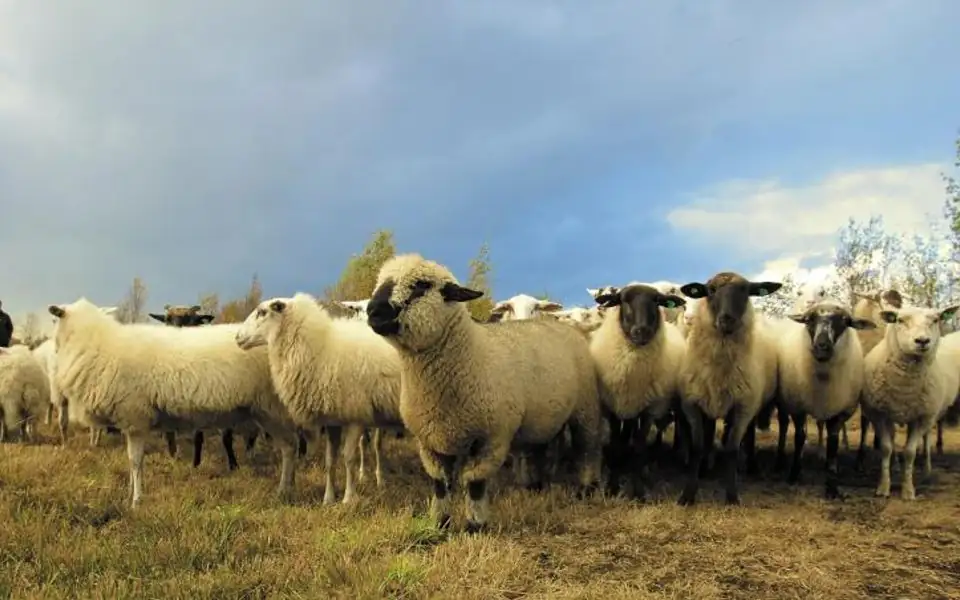
On a small coastal farm, the questions about a ewe are practical. Will she lamb in a cold March rain without help? Will she raise twins on grass with little grain? Will she show some resistance to the footrot and worms that thrive on wet BC pasture? Many old sheep breeds answer yes more reliably than flocks bred specifically for one fast-growing lamb or one fine fleece. Their wool can be a bonus: coarse or naturally coloured fleeces, like those of the Navajo-Churro sheep of the American Southwest, are sought by hand spinners and fibre artists even when commercial wool prices are low.
A few ewes and a carefully chosen ram can keep a bloodline alive, and swapping rams between breeders across the province keeps the gene pool from narrowing.
Poultry: the easiest place to start
Chickens and other birds are often the entry point for farms interested in heritage breeds. They need little space, mature quickly and sell readily as eggs or meat. Canada's own example is the Chantecler, accepted into the American Poultry Association standard in 1921. It was the project of Brother Wilfrid Châtelain, a monk at the Trappist monastery in Oka, Quebec, who wanted a hen that kept laying through a Quebec winter. His answer was a heavy white bird with a small cushion comb and tiny wattles, which leave frostbite little to work on. It remains on endangered lists in Canada.
Heritage poultry generally lays fewer eggs and grows more slowly than commercial hybrids, but many lines forage well, brood their own chicks and tolerate cold. These are the conditions many heritage breeds are well-suited to: a free-range flock on a farm without heated barns.
What family farms actually contribute
Large operations seldom keep heritage livestock breeds, so the work falls to small farms and family operations, including many in the Fraser Valley with mixed livestock. Their contribution is practical:
- Breeding and records: registering animals with breed associations and planning matings to keep distinct bloodlines.
- A market: a breed kept only for shows or sentiment rarely lasts. Selling eggs, lamb, wool or riding horses gives farmers a reason to keep breeding.
- Visibility: farms that welcome visitors, school groups or riders introduce people to animals they would never otherwise see, and a unique local breed often becomes part of a farm's identity.
- Genetic backup: donating semen or embryos to the national gene bank when a valuable animal is available.
Getting started with rare breeds
Anyone thinking of adding heritage breed livestock should start small and plan for the long term. Choose one breed and buy registered stock from established breeders, join the breed association, and talk to a veterinarian about health testing and quarantine for new arrivals. Think about the market before the first birth: who will buy the lambs, eggs or young horses? Endangered populations recover when farmers can afford to keep them, and a clear plan is what turns good intentions into a lasting future for heritage livestock breeds.
